The perfect Focaccia
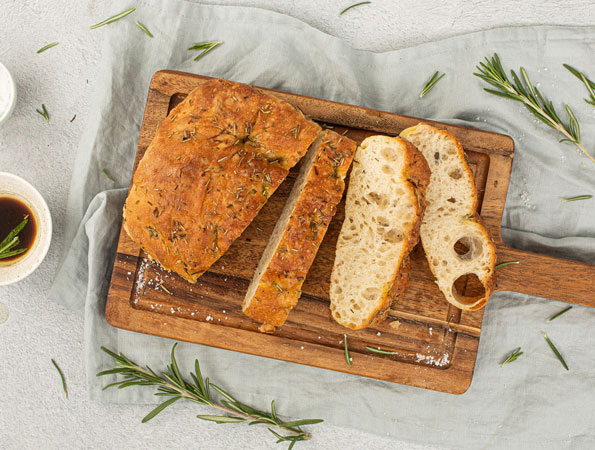
This Italian bread is great for sharing. You can customise the recipe by topping the bread with herbs, sun-dried tomatoes or olives.
Difficulty
Low
Time
95 min
Author
Kenwood
Ingredients
Servings
8
Makes
1 Loaf
500 grams bread flour
2 tsp. salt
7 grams dried yeast
80 grams olive oil
300 grams warm water
olive oil, as needed
sea salt, as needed
Utensils
1 Baking tray large, Spiral Dough Tool
Instructions
Before starting
Soft and pillowy in the middle, golden and slightly crisp at the edges: that is what makes focaccia one of Italy's most loved breads. Originally from Liguria, this simple olive oil bread has become a firm favourite across the UK too, whether served warm alongside a bowl of soup, sliced for sandwiches, or torn and shared at the table. The secret to a good focaccia lies less in complicated technique and more in a well hydrated dough, a generous hand with the olive oil, and plenty of time to prove. With a good stand mixer to take care of the kneading, focaccia is a genuinely easy bake, even for those who have never made bread before.
Step 1
Which flour and oil are best for focaccias?
Choosing the right flour and oil makes a genuine difference to the finished loaf. Strong white bread flour, rather than plain flour, is best for focaccia: its higher gluten content gives the dough the elasticity it needs to trap air and rise into a light, open crumb. A good quality extra virgin olive oil is just as important, since it goes into the dough itself, is drizzled over before baking, and is often finished with another splash once out of the oven. Beyond flavour, the oil also helps to crisp and colour the base and edges of the loaf as it bakes, so it is worth using an olive oil you would happily serve at the table.
Step 2
How to make a soft focaccia bread
Fit the Spiral Dough Tool to your Kenwood stand mixer and grease the large baking tray with a little olive oil. Add the flour, salt, yeast, oil and water to the mixer bowl. Attach the bowl to the machine and fit the splash guard, then mix on speed 1 for 2 minutes, followed by speed 2 for 8 minutes. The dough should end up soft, elastic and slightly sticky to the touch: a wetter dough than you might expect is exactly what gives focaccia its light, airy crumb, so resist the urge to add extra flour. Transfer the dough to the prepared tray and gently stretch and pat it out until it covers the base, roughly 2cm high. Cover with oiled cling film and leave to prove for 1 hour, or until roughly doubled in size. This first prove is where most of the flavour and structure develops, so keep the dough somewhere warm and free from draughts and avoid rushing it. A focaccia that turns out dense is very often the result of a proving time cut too short, or a kitchen that is a little too cold, so give the dough the time it needs, and it will reward you with those characteristic air pockets.
Step 3
Baking
Preheat the oven to 200°C, 180°C fan, gas mark 6. Using your fingertips, press indents all over the surface of the dough, right down to the tray: this is what gives focaccia its distinctive dimpled look and helps it hold onto the olive oil as it bakes. Drizzle the olive oil generously over the dough, then sprinkle with sea salt. Bake for 25 minutes at 200°C until golden brown, then leave to cool slightly before slicing and serving.
If you own a Kenwood My Pizzeria pizza oven, it is also worth trying your focaccia there, as the high, even heat gives an especially good rise and a lovely golden, slightly blistered crust. With dual sided heating elements, cooking up to 400°C, My Pizzeria generates almost double the heat in half the time of standard ovens.
Focaccia is at its very best eaten warm, on the day it is baked, but leftovers will keep well for a couple of days in an airtight container. To bring it back to life, warm it through in the oven at around 180°C for 5 to 10 minutes rather than the microwave, which tends to leave it chewy rather than crisp.
Tips
Focaccia Recipe variations
Once you have the base recipe down, focaccia becomes a wonderful way to use up whatever is in the fridge. The classic version is rosemary focaccia: simply push a few sprigs of fresh rosemary into the dimples before baking, alongside the olive oil and sea salt. Other toppings work just as well: try halved cherry tomatoes, sliced black olives, thin rounds of red onion, or a scattering of grated Parmesan for the last few minutes of baking. For a heartier loaf, caramelised onions or roasted garlic pressed into the dough make a lovely addition.
A Kenwood stand mixer takes the effort out of handling a wet, sticky focaccia dough, kneading it to the right consistency without you having to get your hands covered in flour.
As for whether focaccia counts as a healthier bread, it sits somewhere in the middle: it contains more olive oil than a plain white loaf, which brings useful monounsaturated fats, but it is also fairly calorie dense, so it is best enjoyed as part of a balanced diet rather than an everyday staple.

Delivery
Delivery within 1-3 business days

Money Back Guarantee
30-day return policy

Payments
Secure payments
Delivery
Delivery within 1-3 business days
Money Back Guarantee
30-day return policy
Payments
Secure payments
Sign up to receive 10% off your first purchase!
You will receive our best offers, news and exclusive benefits!