Shortcrust Pastry
Making your own pastry in the kCook Multi is quick and easy, just follow this recipe which also details how to line a tart case and blind bake. Use this recipe with our Quiche Lorraine recipe.
Difficulty
Low
Time
71 min
Author
Kenwood
Ingredients
Servings
6
Makes
1 tart case
250 g all purpose flour
160 g butter
0.5 tsp salt
60 ml water
1 egg
Utensils
Bowl small, Tart tin 26 cm (10.25"), Parchment paper, Rolling Pin, Baking beans
Instructions
Before starting
What is shortcrust pastry?
Shortcrust pastry is one of the most useful basics to have in your baking repertoire, forming the base for everything from a classic quiche to a simple fruit tart. It comes together with just a handful of store cupboard ingredients, yet getting a crisp, crumbly result rather than a tough, chewy one comes down to a few small details: cold butter, a light touch, and enough resting time for the dough to relax. Once mastered, this shortcrust pastry recipe becomes one you will turn to again and again, whether you are making it by hand or letting a stand mixer do the work for you.
Shortcrust pastry gets its name from its texture: when butter is worked into flour, it coats the flour particles and shortens the gluten strands that would otherwise make the dough elastic and chewy. The result, once baked, is a pastry that is crumbly and tender rather than stretchy, which is where the term short comes from, the same root shared by shortbread and shortcake. In France it is known as pâte brisée. Because it is not sweetened, this pastry works equally well for savoury bakes such as quiches, tarts and pies, and for desserts, where a little sugar can be added to the dough to suit the filling.
A good shortcrust pastry relies on the classic ratio of half fat to flour, along with a small amount of salt, egg and cold water to bring everything together. Butter is the traditional choice of fat because of the flavour and colour it gives the finished pastry, and it works best straight from the fridge, cut into small cubes so it can be evenly worked through the flour. The egg adds richness and helps to bind the dough, while the water should always be added a little at a time. Too much liquid makes for a tough pastry, so it is best to stop as soon as the mixture comes together into a dough.
How to
Baking
Grease and flour a clean tart pan. Fit a Kenwood stand mixers fitted with the K beater and add the flour, butter and salt. Mix on a low speed just until the butter is fully incorporated, taking care not to overwork the dough, as too much mixing develops the gluten and results in a tougher pastry. Add the water to the bowl and mix on a low speed for a further minute, then transfer the contents onto a clean work surface. Knead lightly, just enough to bring the dough together into a smooth ball, wrap it in cling film, and refrigerate for 20 minutes.
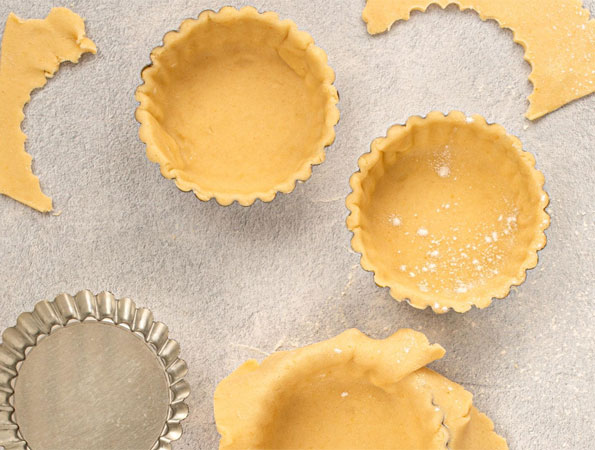
Roll the dough out until it is around 5mm thick, then line the tart pan, pressing it gently into the corners rather than stretching it. Prick the base with a fork and chill for a further 10 minutes before baking. This resting time allows the gluten to relax, which helps prevent the pastry shrinking once it is baked.
Preheat the oven to 190°C for around 1 minute, then line the pastry case with parchment paper and fill with baking beans. This step, known as blind baking, keeps the base flat and prevents it from puffing up while it cooks without a filling. Bake for 12 minutes at 190°C, then remove the paper and beans, brush the pastry with beaten egg for a golden sheen, and return it to the oven for a further 3 minutes at 170°C. Leave to cool completely before filling and using.
Tips
Recipes with your shortcrust pastry
Once you have your shortcrust pastry case ready, the possibilities are wide ranging. It is the classic base for a quiche, whether filled with bacon and cheese or a simple vegetable and herb mix, and works equally well for savoury tarts, sausage rolls and pies. For a sweeter finish, stir a tablespoon or two of caster sugar into the dry ingredients before adding the butter, which turns this into a lovely base for fruit tarts, custard tarts or a classic treacle tart. Baked and cooled, a well-made shortcrust case will keep in an airtight container for a day or two, or can be frozen unbaked for up to three months, ready whenever the next pie or tart idea comes along.

Delivery
Delivery within 1-3 business days

Money Back Guarantee
30-day return policy

Payments
Secure payments
Delivery
Delivery within 1-3 business days
Money Back Guarantee
30-day return policy
Payments
Secure payments
Want to mix with us?
Our newsletter gives you recipes, tricks, promotions and more.